
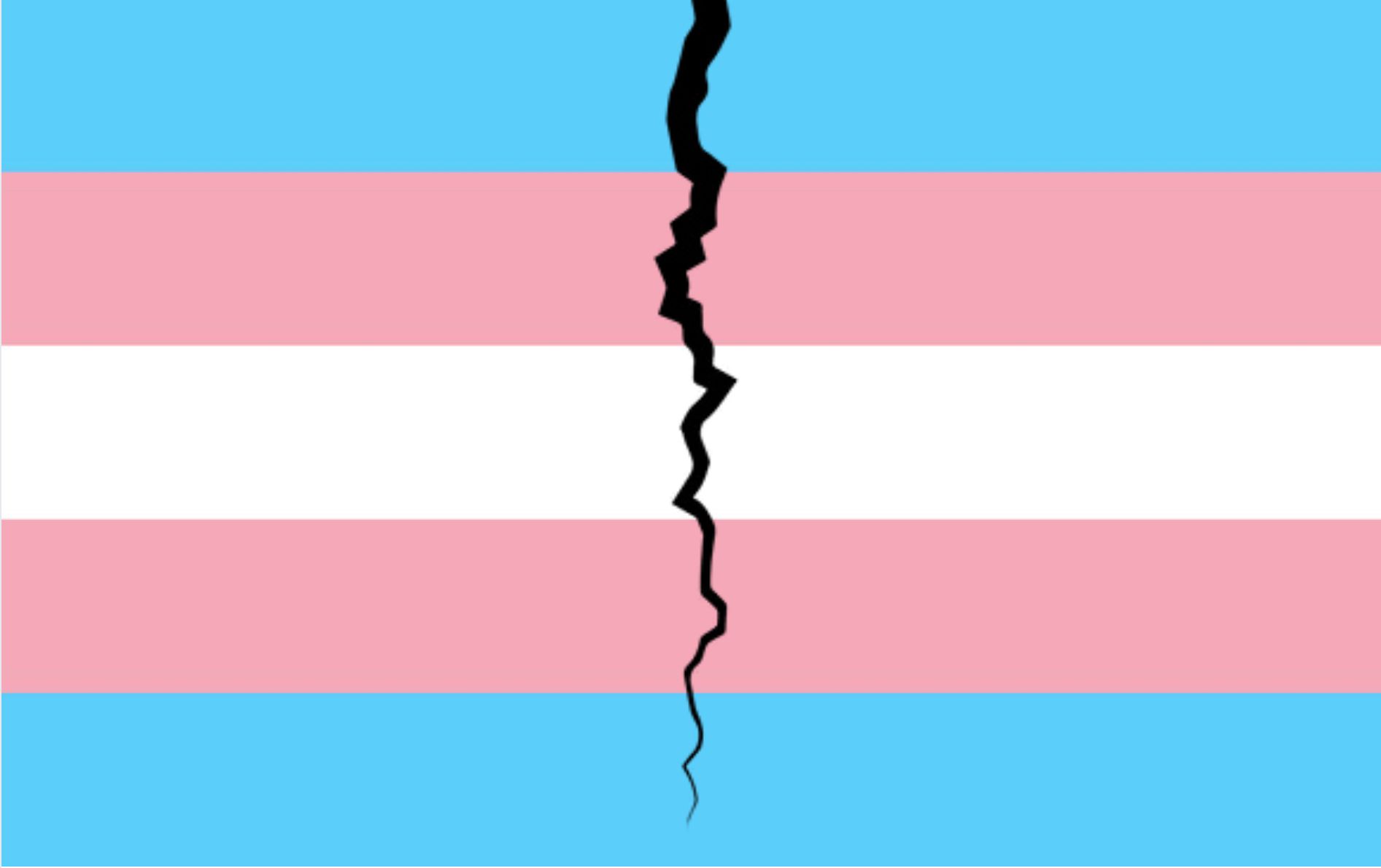
This piece has been updated from its original email version.
A prominent free speech organization helped two right-wing dark money nonprofits score a legal win last month against an Ohio school board and its anti-bullying policy protecting transgender and nonbinary students.
In an en banc ruling, the U.S. Court of Appeals for the Sixth Circuit granted a preliminary injunction to Defending Education (formerly Parents Defending Education). The group, labeled by the Southern Poverty Law Center (SPLC) as “anti-student-inclusion,” had sued the Olentangy Local School Board of Education in 2023 over its anti-bullying policy prohibiting “discriminatory language” about immutable traits, including gender identity. It argued the policy violated the First Amendment rights of students who wished to misgender their transgender peers.
The court found Defending Education would likely succeed on its claims, reversing a previous denial by the district court, which had been upheld by its own three-judge panel.
Supporting Defending Education was the Foundation for Individual Rights and Expression (FIRE), a group dedicated to free speech on college campuses. FIRE filed an amicus brief with the Manhattan Institute—a right-wing think tank the SPLC has identified as part of an anti-LGBTQIA+ pseudoscience network—backing the lawsuit and calling for a reversal of the lower court’s injunction ruling.
The Ohio case is not the first time FIRE has sided with opponents of transgender equality. It wrote a letter of concern in 2023 to Long Island University, for example, after the school punished a student group for social media posts critical of transgender women. More recently, FIRE defended the rights of parents to protest the inclusion of transgender student athletes in high school sports.
FIRE has longstanding right-wing ties. A former member of the State Policy Network, it has received support from major conservative funders like the Lynde and Harry Bradley Foundation and groups tied to Charles Koch, the Coors family, and Leonard Leo. Some of its large right-wing funders have also given to Defending Education and Manhattan Institute.
FIRE’s focus on campus speech aligns with right-wing efforts to reshape higher education. The group has collaborated with the far-right Turning Point USA and defended its University of Maryland chapter after the school required additional security for a speaker event in the wake of founder Charlie Kirk’s murder.
The group publishes a rankings list of schools based on their supposed openness to free speech—a project it launched with the research firm College Pulse and right-wing RealClear Education. For the last two years, it has ranked Harvard poorly, citing grievances from mainly conservative students, including one who complained of having “to introduce ourselves by stating pronouns.”
The FIRE/Manhattan Institute brief treated transgender students’ preferred pronouns as a matter of political debate, arguing that prohibiting intentional misgendering amounted to government-compelled speech.
“Olentangy School District seeks, through a web of interconnected anti-harassment policies, to compel all students to use another student’s chosen pronouns,” it read. “Students are required to do so even if they have religious, moral, or philosophical objections to doing so, as do the student members of plaintiff organization Parents Defending Education.”
The American Medical Association notes that “Empirical evidence has demonstrated that trans and non-binary gender identities are normal variations of human identity and expression.”
The brief’s argument echoed Civil Rights Act opponents like the late Sen. John Tower (R-Texas), who said the law would deny business owners “any freedom to speak or to act on the basis of their religious convictions or their deep-rooted preferences for associating or not associating with certain classifications of people.”
Students do not lose their First Amendment rights in school, but courts allow officials to limit their speech under certain circumstances like harassment. In the landmark case of Tinker v. Des Moines (1969), the Supreme Court held that officials may regulate student speech that is—or is likely to be—substantially disruptive or that “invades the rights of others.” According to FIRE and the Manhattan Institute deliberate misgendering did not inherently meet this standard.
D Dangaran, an assistant law professor at the University of Hawaii at Manoa and co-chair of the National Trans Bar Association, told Important Context that “the harm experienced by trans people when they are intentionally misgendered runs deeper than the Sixth Circuit acknowledged” and said “the trial court was in a much better position to weigh that harm.”
Research has shown that misgendering is associated with feelings of psychological distress and stigmatization among transgender people—a population with high suicide rates.
Civil rights attorney and Harvard Law professor Alejandra Caraballo compared misgendering to slurs, warning, “Once you make the distinction that one group’s dignity is insufficient to curtail behavior to ensure an orderly classroom, you erode those protections for everyone else.”
In recent years, transgender Americans have faced escalating political and legal attacks from the right. The Trump administration has been particularly hostile, rescinding federal protections, moving to ban them from military service, and taking steps to restrict access to gender-affirming care, among other actions. According to Trans Legislation Tracker, over 1,000 anti-trans bills were introduced across 49 states this year—124 passed.
FIRE was not the only speech-focused group supporting Defending Education. The American Civil Liberties Union filed an amicus brief arguing that the anti-bullying policy was overly broad but noted that intentional misgendering might “rise to the level of such severe or pervasive harassment that it creates a hostile environment and may be regulable on that basis.” The ACLU also rejected the compelled-speech argument because accommodations existed for students who wished to use different pronouns.
Dangaran told Important Context that the Sixth Circuit’s interpretation of the Tinker standard was “not the only path courts can take” regarding misgendering and anti-trans messages in schools, explaining that in 2024, the First Circuit found that a student wearing a shirt reading “there are only two genders” was disruptive.
“One could say that there’s a split,” they said while cautioning that the means of communication in the two cases “could make a difference.”
Kenneth White, of the law firm Brown White & Osborn, said he thought the Sixth Circuit dissent in the Ohio case made a “very plausible case that allowing students to misgender peers is inherently disruptive in the way that using racial slurs at them would be.”
“But school speech caselaw is a bit of a mess so it’s not an absolute clear call,” he added, noting that disruption is the standard for school speech—not morality, manners, or decency.