

Meat and Dairy Industries Spent Big Money Lobbying Ahead of Trump Dietary Guideline Changes
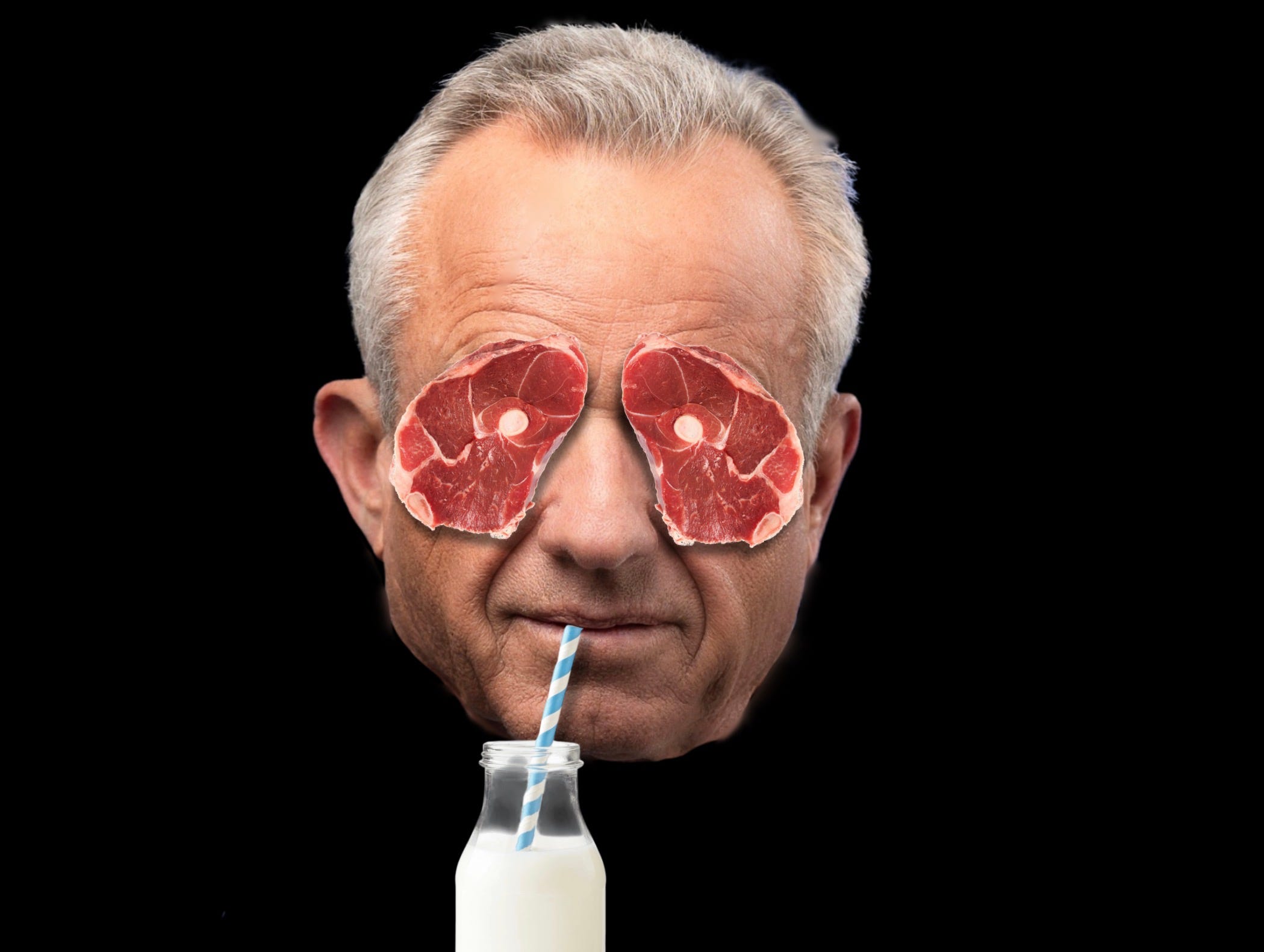
The new Dietary Guidelines for Americans emphasize red meat and dairy.

This piece has been updated from its original email version.
In January, the Trump administration unveiled sweeping changes to the recommended dietary guidelines, promoting increased consumption of red meat and whole-fat dairy products, which are high in saturated fat. The recommendations followed a year in which beef and dairy industry groups spent hundreds of thousands of dollars lobbying federal health agencies on nutrition policy.
The Dietary Guidelines for Americans (DGA), released by the US Department of Health and Human Services and the US Department of Agriculture, not only provide nutritional advice for individuals, but also influence federally funded meal programs like school lunches and SNAP benefits relied on by tens of millions of Americans.
The new DGA represent a significant departure from previous years. Earlier guidelines recommended limiting saturated fat intake to less than 10 percent of daily calories and encouraged lower-fat dairy and reduced consumption of red and processed meat.
While the 2025-2030 DGA maintain the recommended limit on saturated fat, they substantially increase the recommended daily intake of protein, emphasizing animal sources, including red meat, and encourage the use of butter, full-fat dairy, and beef tallow as “healthy fats.”
The changes reflect the so-called “Make America Healthy Again” agenda of HHS Secretary Robert Kennedy Jr., who blames processed foods for fueling what he describes as a chronic disease epidemic. HHS has framed the new guidelines as a rebuke of corporate influence.
“For decades, the Dietary Guidelines favored corporate interests over common sense, science-driven advice to improve the health of Americans,” a fact sheet on the department’s website reads. “That ends today.”
However, federal lobbying disclosures show that in the year leading up to the revisions, major meat and dairy groups spent hundreds of thousands of dollars lobbying the administration—including HHS and the FDA—on nutrition policy and the dietary guidelines specifically, among other issues.
When the changes were announced, STAT News reported that some of the researchers on the panel that helped shape the new guidelines had ties to the meat and dairy industries. The disclosures offer even more insight into how the guidelines came to be.
Federal lobbying disclosures report total spending, the policy issues of concern, and the federal agencies contacted. While they generally do not indicate the positions taken by the lobbyists or how spending was allocated, they provide a broad snapshot of industry lobbying activity.
From the second quarter through the end of last year, the National Cattlemen’s Beef Association (NCBA), the nation’s largest trade group representing the U.S. cattle and beef industry, spent $210,000 lobbying on a number of issues, including the Dietary Guidelines for Americans. The group targeted the FDA and the White House Office, along with the House, Senate, USDA and U.S. Forest Service.
In February, Kennedy attended NCBA’s annual convention for the cattle industry, CattleCon 2026. The group’s media contact, Hunter Ihrman, reposted a tweet by the secretary from the event in which he touted the new dietary guidelines, declaring “The war on protein is over—and beef is back on the menu.”
In a statement, NCBA praised the new DGA for emphasizing “beef’s place in a healthy diet” and credited Agriculture Secretary Brooke Rollins and Kennedy for their “streamlined approach” that stayed true to science while being “far more practical.”
The Meat Institute, another major industry group representing beef producers, spent nearly $500,000 last year lobbying HHS, USDA, and Congress on issues including nutrition, and released a similar statement, lauding Rollins and Kennedy for having “simplified the Dietary Guidelines making it clear that meat is a protein powerhouse which plays a vital role in healthy diets.”
Lobbying disclosures for Q2 and Q3 last year from the National Pork Producers Council (NPPC)—the largest pork industry trade association in the country—list “engagement with the administration on Make America Healthy Again report.”
The report took aim at the DGA for “problematic reductionist recommendations” like advising limiting saturated fats and sodium, and was widely criticized for citing non-existent studies and containing other errors.
NCBA praised the report for highlighting the “positive role beef plays in a healthy diet.” The report noted that “beef contains protein that maintains skeletal muscle, which plays a key role in regulating metabolic health.” It also touted the benefits of dairy.
NPPC hailed the new DGA with the group’s president-elect Rob Brenneman declaring that they gave pork and other meat “their due when it comes to Americans’ health and dietary habits.”
The National Milk Producers Federation (NMPF), the largest dairy farmer organization in the U.S., spent nearly $600,000 in-house between the second and fourth quarter last year, lobbying on issues including the dietary guidelines, targeting the USDA and—in Q4—the FDA. NMPF released a statement from its president and CEO, Gregg Doud, thanking HHS and USDA for the DGA changes and declaring “we welcome the potential these guidelines hold for expanding upon dairy’s critical role in the diet.”
Along with industry groups, Tyson Foods, one of the so-called “big four” meat producers in the country, spent $1.6 million last year on in-house lobbying, targeting the FDA, HHS, and USDA among other agencies and Congress, focusing on issues including nutrition. The company did not lobby HHS in 2023 or 2024.
In May, Tyson handed Kennedy a political win by publicly committing to remove petroleum-based synthetic dyes from its food products—an issue the secretary has repeatedly highlighted.
Nutrition experts have criticized the new DGA for their promotion of red meat and dairy. The Academy of Nutrition and Dietetics noted that such emphasis “is inconsistent with the recommendation of limiting saturated fat to 10% of total calories.” The American Heart Association expressed concern “that recommendations regarding salt seasoning and red meat consumption could inadvertently lead consumers to exceed recommended limits for sodium and saturated fats, which are primary drivers of cardiovascular disease.”
Dr. Jessica Knurick, a registered dietitian with a PhD in nutrition science, told Important Context that the visual representation released by HHS to explain the new dietary recommendations—with meat and dairy up at the top—was worse than the guidelines themselves.
“It’s nearly impossible to follow their visual representation of the guidelines and keep saturated down under 10 percent,” she said.
Knurick noted that lobbying on the DGA is normal, but the new guidelines—or at least the visual representation of them put out by HHS—made “very clear” that meat and dairy lobbying interests “had a huge role” in their shaping.
“If you know anything historically about the dietary guidelines, you know all of these different industries lobby quite hard, and this time, the meat and dairy industries were quite successful,” she said. ”Which is just absolutely ridiculous, considering that…the thing that [Kennedy] constantly talks about are conflicts of interest and corruption, as he calls it, with…lobbying interests and guidelines.”
“So it’s…kind of one of those things where every accusation is a confession with these people,” she added.