

“The Entire City's in This Sort of State of Siege:” A Conversation With A Minneapolis ICE Tracker
Important Context spoke with attorney Will Stancil, who has been tracking ICE in his city.

This piece has been updated from its original email version.
On Saturday, federal agents shot and killed Alex Pretti, an intensive care nurse at the Minneapolis Veterans Affairs hospital. The 37-year-old had been involved in grassroots efforts to track the immigration crackdown in his city. His was the second such fatal shooting this month.
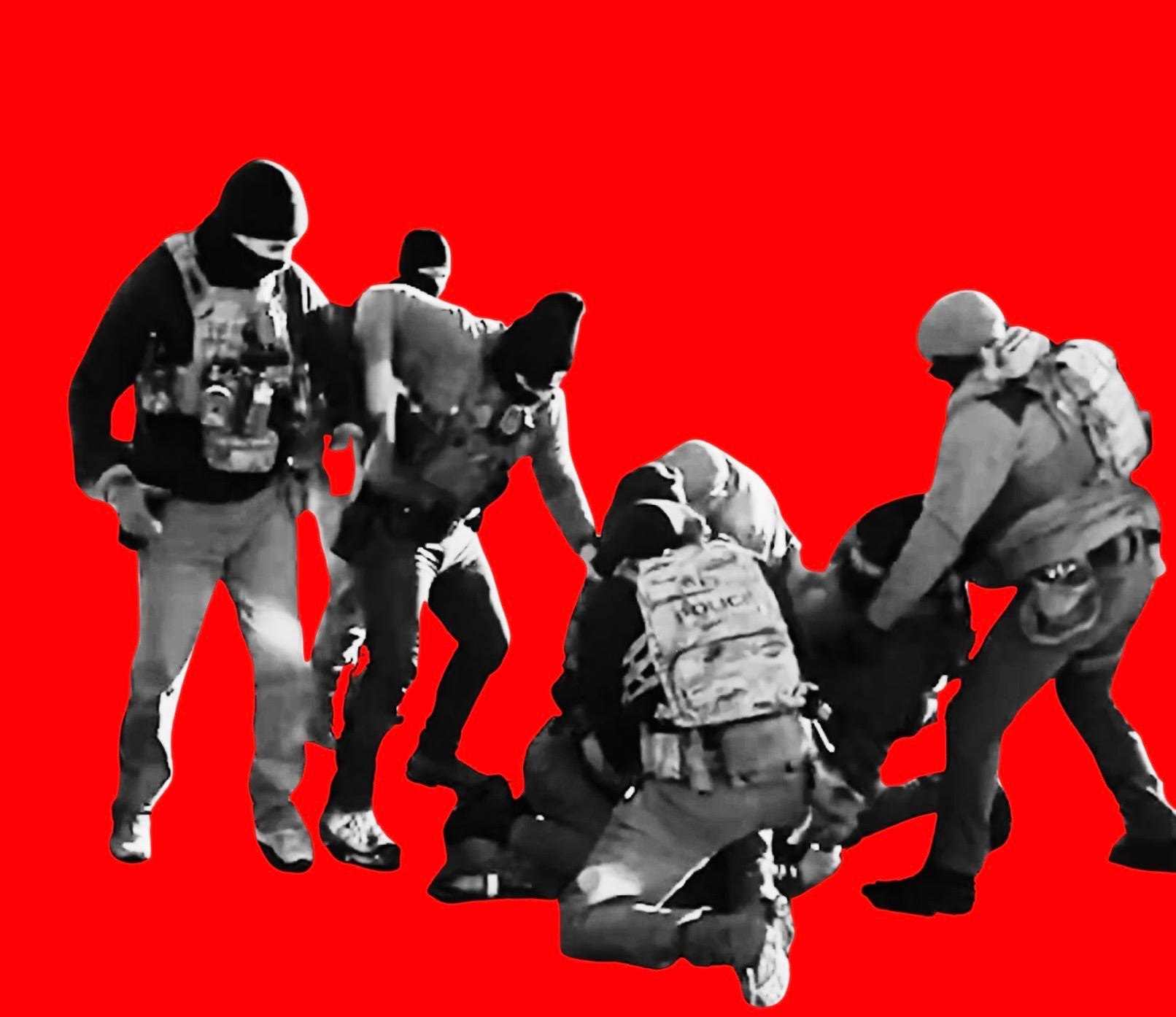
Footage of the incident shows Pretti holding up a cell phone to record a confrontation with CBP agents outside a donut shop. Within minutes, Pretti is pepper sprayed, restrained on the ground, and struck repeatedly. Amid the struggle, one agent reaches into Pretti’s waistband and removes his legally-carried SIG Sauer P320 pistol from a rear holster. Simultaneously, another agent draws his own weapon and aims it at the disarmed nurse. As the agent with Pretti’s gun runs off, a shot rings out. Seconds later three more are fired in quick succession as Pretti goes limp. The agents continue firing—a total of six more shots—at his still body.
Weeks earlier, Renee Good, a 37-year-old mother of three, was fatally shot as she attempted to drive away from agents yelling conflicting orders at her. Trump administration officials have thus far defended the immigration officers, fabricating the events that led to the shootings and painting the victims as terrorists.
Across Minneapolis, residents have responded to the escalating immigration enforcement actions and violence with mass mobilization, forming a decentralized rapid response network to track the movements of the federal agents and keep their communities alerted.
Hours after the Pretti shooting, Important Context spoke with one person involved in those efforts: former Minnesota House candidate Will Stancil, an attorney and housing policy researcher. Stancil had just gotten home from the scene.
Below is transcript of the conversation, which has been edited for clarity and abridged. Paid subscribers can also listen to the audio of the full unabridged two-part interview at the bottom of this piece.
Since this interview was conducted, the Trump administration has reportedly ousted Greg Bovino as Border Patrol commander-at-large and is taking him out of the state and sending in Border Czar Tom Homan.
Transcript
Bragman: Will, I want to thank you for taking the time to speak with me today. I wish it were under better circumstances, but, you know, I’m glad, I’m glad to talk to you anyway.
Stancil: Yeah, just for context, I got back from, you know, the shooting of Alex Pretti was this morning, and so I have literally got back from—yeah, I kind of raced out there, and I’ve been out there since, you know, pretty quickly after it happened, and I just got back, literally four minutes ago. So I still have a lot of tear gas on my clothes, and I’m, like, dealing with some unprocessed trauma right now. So really, a great interview subject, I think.
Bragman: Yeah, let’s start there. That’s the latest grisly update.
Stancil: So for context here, I’ve been doing this rapid response, you know, community watch thing. This happened within my hyper local—is what we call it—rapid response area. So this appeared to be someone who was doing essentially the exact same thing I had been doing—at least that’s my best information. There’s a very good chance I know his pseudonym. We all work pseudonymously, mostly. So while I know his real name, I’m not 100% sure what his name was. There’s a couple people I suspect that might be, both of whom I like quite a lot. And so I’ve been trying to figure out who he was. There’s one guy in particular that I was just telling my friend yesterday. He’s, like, my favorite guy out there. He’s out there all the time and…very good at this. And I’m a little scared it might have been him, but I don’t know. I met him one time, but it was sort of a drive by where he introduced himself, and we kind of did a little wave.
And so it may not be him. I don’t know for sure who it was.
Bragman: Can you tell me a little bit more about these operations to track ICE and keep tabs on what they’re doing?
Stancil: So basically, what Minneapolis has done in response to ICE is essentially organize into neighborhood groups. People get a little upset when you describe it, but it’s all in the press anyway, and I also don’t think the secrecy is all that helpful. ICE obviously knows what we’re doing. So what we do is we organize into neighborhood groups. And it’s all on signal. You join a signal chat for your neighborhood. There’s kind of nested Signals all the way up to the top. But most of it happens locally. At any given time, you’ll have 500 to 1000 people in the neighborhood group, which is—for a neighborhood of probably 30,000 people—pretty good.
So you have people watching; you have people foot patrolling with whistles; and then you have people who are doing the commute—it’s called commuting, which is when you drive around in a car and you basically look for vehicles that appear to be ICE vehicles. We have people serving as dispatch and plate checkers. We have open-source directories of known ICE plates, and so when you see something suspicious, one thing you do is you call it in—the plate—and see if it’s confirmed ICE. I mean, a lot of times though, we don’t have the plate or we’re not sure, so and you’re trying to scope out the car, usually it’s like, at least fairly obvious if we should be suspicious. And sometimes it’s completely obvious--they’re in uniform or they’re wearing masks, that’s pretty often.
I mean, a lot of times though, we don’t have the plate or we’re not sure, so and you’re trying to scope out the car, usually it’s like, at least fairly obvious if we should be suspicious. And sometimes it’s completely obvious—they’re in uniform or they’re wearing masks, that’s pretty often. And once you know that it’s ICE, we try and keep eyes on them. We get some observers on them. The car commuters will typically tell them, as long as they’re in the neighborhood, and really, as long as they’re in the city—and they work pretty hard to get out. They do not like being watched, and so they work pretty hard to get out of our site. And so you end up these...kind of long, slow car chases, which they often end by egregiously running a red light or something, which, [would] be high risk for us to do.
Bragman: We’ve seen videos of ICE agents threatening people for doing this activity.
Stancil: It infuriates them. They hate it. They really can’t stand it. Clearly they’re putting a lot of resources into not being detected. I mean, part of it is because of the nature of their nominal immigration enforcement operation here. They will pull up on the intersection or alley or somewhere, and just jump out and grab someone, stuff them in a van. Sort of secret police style. There’s no attempt to talk to the person, or gather information. They’re not talking to bystanders. They’re certainly sticking around afterwards. The van goes racing off. It’s very difficult for them to do this if there’s many people in the street watching them.
And so…if you’re following a car, they know that if they get it out of the car, an alert will immediately go up, and everyone within, you know, many blocks will race that way. And so it has been a major impediment, I think, to their operations because of how they’ve chosen to conduct their operations. They’re not acting like traditional law enforcement here in any way, and because of that, they really can’t abide the kind of citizen observation that traditional law enforcement sees as just part of the job.
Bragman: Have we ever seen anything like this?
Stancil: I mean, I haven’t seen anything like this. I don’t know. I know that these tactics were largely developed in Chicago. The initial training I received was from people who had organized in Chicago. With that said, the scale of our ice deployment—the scale for population is 25 times greater than Chicago’s was. And the aggressiveness of the tactics—I’ve gotten to a point where I’m getting tear gassed every other day. Very often stuff blows up. Because what will happen is that ICE will—if they get out of cars, the neighborhood will flock there. There’ll be a standoff where...the neighbors are whistling and shouting and then ICE has a standoff, and they all kind of load into a convoy of cars, and then as they leave, they will toss a bunch of tear gas out the back, basically. So it’s become a regular thing.
Also, many times they don’t appear to be even doing anything immigration related. The other day, Greg Bovino was here, and so I ended up tailing his big convoy like three times. He was just rolling from gas station to gas station. He parked all his cars in the gas station behind the pumps. They wouldn’t get gas, they wouldn’t buy anything, they wouldn’t go use the bathroom. And he’d get out, he’d have a little group of ICE guys around him, or Border Patrol, in his case, I guess. They’re heavily armed--like, look like they’re equipped for Fallujah, and all masked, obviously, everyone’s always masked. And he would just sort of strut, you know, stroll into the crowd or the street, and he would literally pose. He always had like, three or four photographers with him. And he would pose for the photographers as he sort of did this thousand-yard stare at his conquered territory. It was very strange.
I mean, it was funny: I wasn’t even really particularly trying to follow him. It was just as I was doing ICE Watch. I just kept running into this convoy at a different gas station. At one point, I did follow him for about 40 minutes, and he went through a residential neighborhood, and they stopped in front of a random house for like, half an hour. No one ever got out of the car, but they had some photographers run up and take pictures and stuff. So it may have been some sort of photo-op thing. They largely appear to be doing this to intimidate, to incite. Some people are being abducted, and it’s terrible, but you know, if you were here to do immigration enforcement, the way they’re doing it is financially, and logistically the worst possible way you could do it.
Bragman: You think the ultimate aim here is just intimidation?
Stancil: For some reason, they want to target Minnesota. And I think the prevailing theory that I’ve heard—I mean, there’s three things. First, Trump hates us because we don’t vote for him, and Tim Walz ran against him. Second, they hate Somalis. Somalis have become their minority of choice. They, you know, it’s they’re Black, they’re Muslim, they’re immigrants—so it’s like, the trifecta for Maga. And then finally, I think the thing is, they think about us as Minnesota from 2020. They think we’re on the edge of rioting. And I think that they have been looking.
Basically, if you look at their history over the last few months, what they’ve been doing is taking increasingly large ICE deployments to increasingly small cities, seeming to try and kick up some civil unrest. [Protesters] burned out a car or something in LA, but there wasn’t really success there, so they went to Chicago. And in Chicago, there weren’t mass riots. And so now they’re coming here with a force that’s just vastly larger. I mean, I think I heard it was 10 times larger than the one they brought to Chicago at this point...And, you know, I think the idea is like, ‘Well, of course, Minnesota riot that you know; everyone knows, from 2020, that Minnesota riots.’ And after that, I don’t know what their plan is exactly, but I suspect it’s: invoke the Insurrection Act, bring in the military, essentially declare martial law—these sort of really sweeping authoritarian plans that Stephen Miller appears to practice rehearsing in front of the mirror every night.
Bragman: What powers would Trump have if he invoked the Insurrection Act?
Stancil: Not really any. The reality is that what he can actually do is use it to support local law enforcement. But they have made it into this almost fetish object for MAGA, where once he invokes the Insurrection Act, then he can just roll tanks over liberals. I think Stephen Miller genuinely dreams of himself as this kind of right-wing authoritarian Goebbels figure, and he’s looking for an excuse to do roundups and put people in camps, and probably have us killed. I mean, honestly, I think he fantasizes about this. I think he has an almost sexual attachment to this idea. You can see it every time something happens, and he’s like, ‘We will crush these little liberal…‘ and you can tell that he’s practiced his speeches entire life.
Yeah, with the jaw-jutting and the—
Stancil: It’s like the comic book version of a fascist. One of the things I think you see with the Trump administration is that—you know, I truly believe these men are fascists, but they’re not fascists in the sense that the old style fascists were developing what fascism meant. They are looking back at those people and seeing them as sort of historical, anti-heroes—protagonists of history—and they are trying to play the role. So that’s why, even after all this, American 2025 is nothing like Germany in 1933. But they’re in a rush to get to the end. They want to get to that stage because that is what they fantasize about. And I really think that they think Minnesota can be their turning point where they can do it.
Bragman: There’s something distinctly American about this iteration of fascism, right? Like, yes, there’s the German model, but there’s plenty of American history that we can look back on to say, like, ‘Oh, they’re clearly drawing from that.’ There’s sort of the sundown town kind of thing going on, where they’re where they’re clearly targeting people of color.
Stancil: I mean, I genuinely think that their inspiration is European fascism. But I do absolutely agree that the form it has taken is this sort of American nativism and racism. I mean, I think it’s interesting when you watch—I’ve had at this point, a front row seat. I was a lead pursuit car between two convoys that abducted people, and then I showed up right before another big abduction happened. What appears to be happening is that they are just indiscriminately targeting people of color. The two that I was the first car there, they just jumped out and grabbed a pedestrian who happened not to be white. I don’t how—I can’t think of any possible way they could’ve known who they were grabbing. They didn’t have a conversation. They didn’t verify their identity as far as anyone could tell. I had a journalist with me and he saw the same thing. It was just literally you’re a non-white person on the street, ICE is hunting you.
And what is happening here in Minnesota as a result is that basically the entire non-white population is afraid to go outside. It’s awful. Our schools are about 50 percent absenteeism. Sometimes it’s 70 percent. Our school system is basically in the COVID state of being mostly empty, kind of collapsing our schools. But we don’t have any federal support this time. There’s no, there’s no resources for remote learning or anything like that. So they’re just trying to make it work. They’ll assign, like, one third-grade teacher to remote learning, and the other one gets all the students. So they both end up in these totally untenable situations where they have massive classes and stuff.
The other thing is people won’t go out to get food. We have the rapid response networks, which is what everyone wants to talk about, but there’s also this huge network of neighbors assisting each other. You can call them mutual aid or whatever, where basically you’re doing food deliveries to many, many, many families that are afraid to go out and get food—just so they can stay alive. Many of our businesses lock their doors all day. You have to ring a bell or knock or maybe a doorman to watch the door and make sure it’s not ICE.
We try and put observers out at particularly vulnerable businesses—like immigrant owned businesses or businesses that employ a lot of immigrants—for shift change and also at close and open. You know, six in the morning, seven the morning. Sometimes, if it’s like a bakery, we’ll need a bunch of people there watching. Two in the morning sometimes, if it’s a restaurant or a bar...and then the big shift changes, we try and have people there so that there’s observers ready if ICE decides to grab someone who’s on their way in and out. So the entire city’s in this sort of state of siege.
Bragman: How significant is the ICE presence? Like, how many agents are there in Minneapolis and throughout the state? I mean, is this, like, every corner you’re gonna find agents?
Stancil: No, it’s not every corner. It’s 3000 agents. So for comparison, our local police force is 600 officers. So it vastly outnumbers the police. They are not always concentrated in Minneapolis. There have been a couple of times where I thought they were potentially moving out of Minneapolis—recent days have shown me I was wrong--where they seem to depart for the suburbs or St. Paul or outstate. You’ll hear about them in Wilmar, Minnesota, which is a little town. We have many diverse suburbs, and they’d be out there taking people. But the primary focus I think, has been Minneapolis.
They tend to move as a wave. They don’t like to send in, like, one or two cars at a time. So, as a patroller, you will be out there, and you’ll have a day where you don’t see a single ICE car. You’ll see one that’s confirmed. And then, the next day, or maybe even three hours later, suddenly they all arrive in force. And when that happens, it’ll be a situation where, if you sit on a major intersection for 15 minutes, you’ll probably see one. But they tend to drive unmarked cars, kind of what you think—dark menacing SUVs, but unmarked, tinted windows. Often plates are obscured or taken off. Sometimes the front windows are very tinted, so you can’t even tell it’s them there.
They kind of lurk around the neighborhood like secret police. But when they’re in the neighborhood, when this is a hub, when this is the focus, you will find them. You know, as a New York Times article says, paranoid Minnesotans “see ICE around every corner,” and it’s like almost literally around every corner. They like to lurk in the alleys—we have alleys between our city blocks, which is how our neighborhoods [are] designed; how Minneapolis is designed. Very, very common for them to lurk in the alleys, just idle in the alleys. We have to check the alleys, and they’ll go racing out when you notice them. They like to lurk in front of businesses.
I think today, if I remember correctly, it was chaotic this morning, this whole incident where someone was killed—was really murdered, executed—started because there was an ICE car that was lurking in front of this particular donut shop. It was just sitting there, I think.
And sometimes, when they lurk, you see them and they race off. But then sometimes, a bunch more cars will suddenly show up and people come out. And it seems like this time maybe the second thing happened—some sort of confrontation happened, where I believe that they shoved an observer, and [Pretti] may have gone up to separate them, and then they start beating him, pistol whipping him, push him to the ground, and shot him, I think, five times. I don’t know exactly how many shots.
Bragman: How ubiquitous is the violence then? Do you have lulls or is it a pretty high baseline of violence from ICE?
Stancil: Yes, it is. You know, obviously if they’re just not in the neighborhood at all, you’re not going to see anything. I mean,I don’t think there’s been a day since they’ve gotten here where they haven’t deployed tear gas somewhere.
Days where things are really popping off…you essentially go from one massive incident with tear gas and pepper spray and rubber bullets to the next. Because they will pull up, a crowd will gather, people start throwing ice and snow, shouting. The observers are trained to de-escalate, although it’s tough. But obviously just random people in the street are very, very angry. Anger here is pretty much universal, and so things will kick off and they’ll start spraying pepper balls at people; almost always will drop tear gas before they leave. Maybe lots of it.
It’s become very common for them—and I have many, many videos of them just directly pepper spraying people right in the face. You know, someone gets a little too mouthy with them, a little too aggressive, and they will just shoot that person like, from six inches away, right in the eyes. And I’ve seen that personally, like many times.
I own several gas masks now. It’s funny because Bondi was on TV, I saw earlier on social media, saying, ‘These guys are so organized. They’re terrorists. They have all gas masks. Who has a gas mask?’ And it’s like, yeah, the reason I got gas masks is, you guys tear gas me, like, two times in 36 hours, after which I thought, ‘that’s awful, I don’t want to do that again,’ and I went out and bought a gas mask. And now I’ve used it many times. I mean, I’m covered with tear gas right now. I can smell it on my clothes from earlier today…Minneapolis winter gear is now: coat, gloves, hat, gas mask.
Bragman: So you mentioned on BlueSky that ICE is targeting children, and that it’s something that everybody knows. And you got into it a little bit on the site, but can you explain why you think that is?
Stancil: There’s been a noticeable uptick in them targeting very small children. One thing they’re also doing a lot is hanging around schools. They’ll circle the school parking lot around pick-up or drop-off time—have a car full of masked men.
I just want to emphasize that even I, when I first heard this, I thought that’s crazy. But it’s like, no, it’s not. They’re doing it. And I think that the reason why is because they are intentionally engaging in the most aggressive; the most horrifying; the most enraging immigration enforcement possible—the absolute, maximalist approach—because their goal here isn’t really to deport people or catch criminals. Their goal here is to incite violence and to enrage us and to terrorize us.
I mean, one of the things that they keep saying is ‘Oh, you know, we’re trying to find sex traffickers.’ It’s like, you’re deporting five year olds. I watched them abduct two, sobbing, sixteen-year-old young girls who I believe were citizens.
The other thing I’d say about Minnesota is that people don’t realize this, because you hear a lot about our Somali population, or Hmong population, the Somali population is almost entirely citizens. Most Somalis in Minnesota are citizens. Almost everyone else is a lawful permanent resident. But I’m talking like 85% plus are citizens. The Hmong population is even more. I think the population is probably 95% plus citizens. This is the immigrant population that’s been here for like, three generations at this point. The Somali one has been there about one and a half. These are not populations with high numbers of undocumented immigrants at all.
And so they are sort of relying on a sense that, ‘Well, you have Somalis in America—they can’t possibly be American citizens,’ but they are. There’s very few people here you can lawfully deport. And so it doesn’t make any sense as a place you would go to if that’s what you’re looking to do. The other thing they’ve said—the initial excuse was about a fraud in the Somali community and daycares. You know, there’s viral videos about Somali daycares being fraudulent. And I’m going to say there is some fraud in immigrant communities the same way that you have any sort of small, close knit immigrant population, it’s a good environment for small scale fraud and crime. This is sort of the storied history of Italians in America. But it’s not like a huge social problem here in Minnesota. Minnesotans don’t feel broadly threatened by Somalis. They’re part of our communities, their great neighbors. There’s been a couple major frauds. But like, by and large, these are people who are extremely entrepreneurial; extremely friendly neighbors—peaceful, quiet, friendly.
Also, if you’re here to investigate fraud, you didn’t bring accountants, you didn’t bring an auditor. I don’t think there’s a guy in the back of the blacked Ford Expedition, scrolling through a spreadsheet of revenues. It’s literally just an army full of poorly trained dudes with machine guns. Every reason they have given for this is just absurd. I mean, it’s absurd, and no one here believes it. Like, no one believes it. There’s no debate here. One of the things that I really would like to also emphasize—I know I’m just kind of doing my own interview at this point, going off…
Bragman: No, it’s fine. I signed up for this.
Stancil: Yeah, you can add any questions later to make it like, you know, I give it to you prompt off. But one of the things I’d like to emphasize about this is the uniformity of the opposition here in Minneapolis. Like every business, every street post, every conversation here is about ICE, ICE, ICE, and it’s just gotten worse, and worse, and worse. I wasn’t remotely surprised that we got 30,000 people or whatever at the protest yesterday, despite it being negative 20, because the entire city is opposed to ICE right now.
Bragman: I’ve heard this, that it’s not just progressives and liberals—it’s conservatives, it’s everybody.
Stancil: It’s everybody. I mean, it’s like an invading force. Outside, they’re telling all these lies—you know, agitators, protesters, fraud, ‘we’re here taking sex traffickers.’ But on the ground, that’s not what we’re seeing. And no one thinks that. They’re lying, and everyone here knows they’re lying. No one here is confused about what they’re doing. You can’t see this for one second and think, ‘Oh yeah, they’re just taking away a violent sex trafficker.’ They’re harassing our neighbors. They’re stalking through our alleys. They’re lurking around our schools. And every once in a while, they’ll shoot someone dead for no reason. It’s unbelievable to hear the idea that there’s some sort of valid government purpose behind any of this. We are being targeted, and everyone knows we’re being targeted.
Bragman: So do you think this is a test for the rest of the country? Like if they’re successful here, then they’ll export this model?
Stancil: Yes, I absolutely do. I think that they think if they can knock one domino over—you know, break us—then they will move on and then just go one by one down the list. And so, you know, I really think that this is why we have to stop them here. I keep saying on social media, this will be their Gettysburg.
